
How to Turn a Second Home Into a Short-Term Rental in Southern West Virginia
Owning a second home in Southern West Virginia can create opportunities beyond occasional personal use.
For some property owners, converting that home into a short-term rental can provide a way to offset ownership costs, generate additional income, and make better use of a property that might otherwise sit empty for part of the year.
But turning a house into a successful short-term rental takes more than listing it on Airbnb or Vrbo.
The property has to be prepared for guests, operated consistently, and supported locally — especially if the owner does not live nearby.
Start With the Property Itself
The first question is whether the property is actually a good fit for short-term rental use.
Consider things like:
Number of bedrooms and bathrooms
Sleeping capacity
Parking
Road access
Internet availability
Outdoor space
Proximity to attractions
Condition of the home
Heating and cooling
Laundry access
Safety features
For properties serving visitors to Southern West Virginia’s outdoor recreation areas, parking can be especially important.
Guests traveling with trucks, trailers, motorcycles, or side-by-sides may need significantly more space than a typical vacation traveler.
A property that is difficult to access or does not have enough parking may still work as a rental, but the limitation should be considered before investing heavily in furnishings or renovations.
Think About Who the Guest Will Be
A strong short-term rental should be designed around the people most likely to stay there.
In Southern West Virginia, that may include:
Off-road and UTV riders
Families visiting the region
Outdoor recreation travelers
Contractors and traveling workers
Groups visiting friends or relatives
Travelers looking for mountain getaways
Those guests may value different features.
For example, an off-road group may care more about trailer parking, easy access, outdoor storage, and space for muddy gear than luxury finishes.
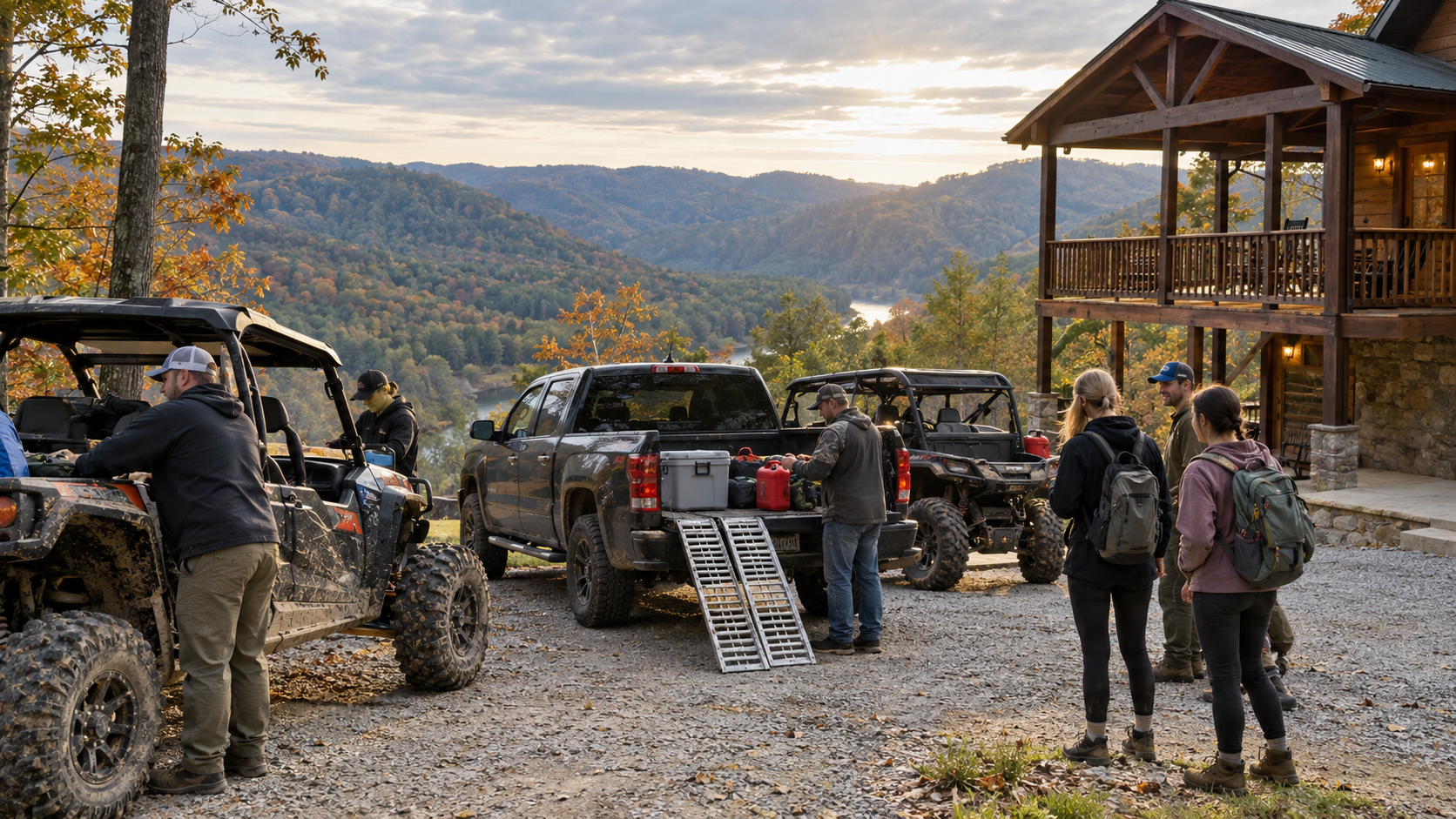
Off-road travelers with side-by-sides and trucks at a Southern West Virginia rental property
Understanding the likely guest helps determine where money should be spent.
Prepare the Home for Guest Use
A second home set up for personal use may not automatically be ready for paying guests.
Before launching, owners should walk through the property from a guest’s perspective.
That includes checking:
Beds and mattresses
Linens and towels
Kitchen supplies
Furniture
Wi-Fi
TVs and entertainment
Lighting
Locks and guest access
Smoke and carbon monoxide detectors
Fire extinguishers
Exterior lighting
Trash and recycling
Cleaning supplies
Basic toiletries and consumables
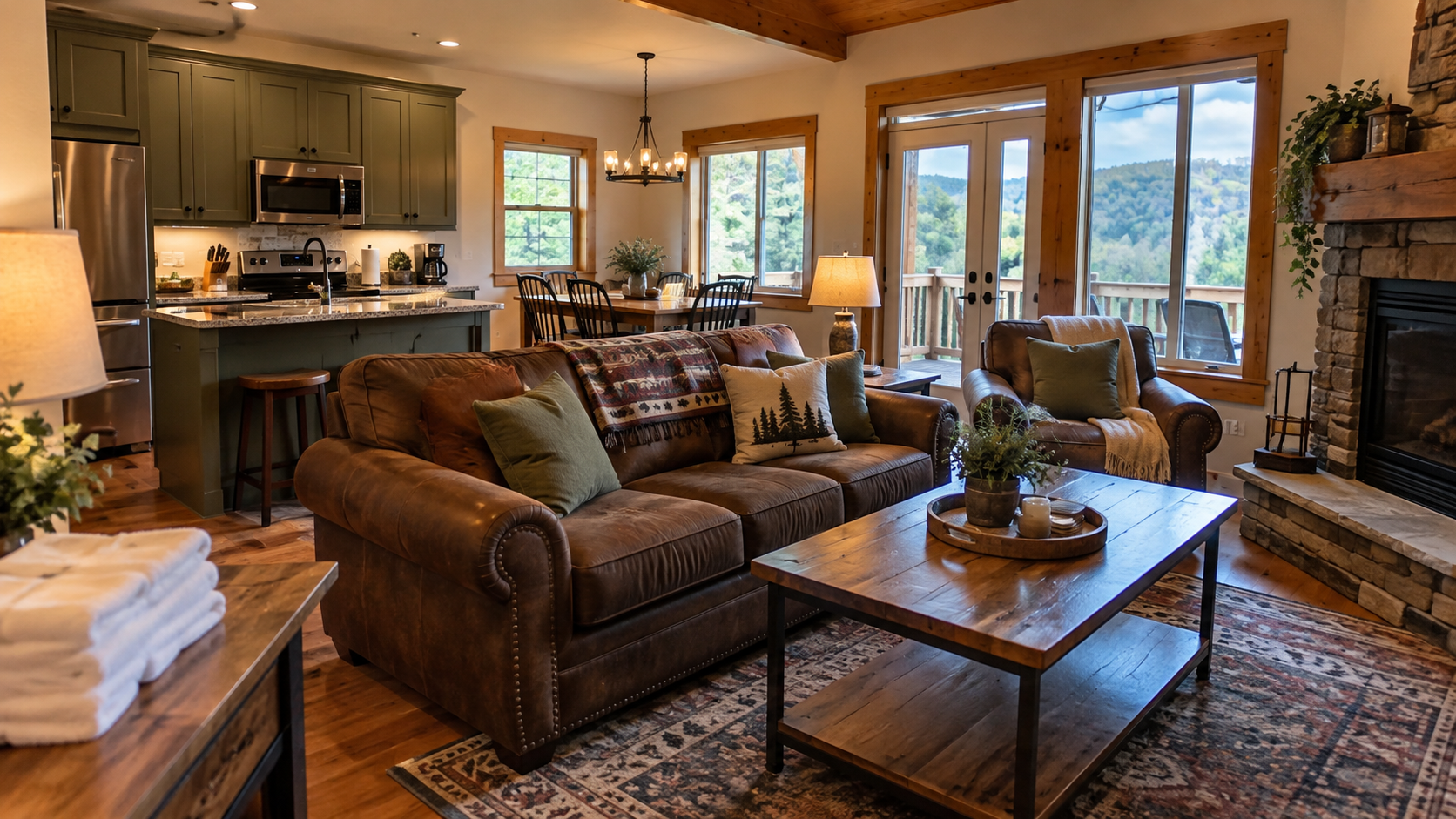
Guest-ready short-term rental interior in Southern West Virginia
It is usually better to create a dependable, comfortable property than to overspend trying to make every feature luxurious.
Guests tend to notice cleanliness, comfort, convenience, and whether the home matches the listing.
Build a Turnover System Before the First Booking
One of the biggest mistakes new STR owners can make is waiting until bookings begin before figuring out how turnovers will work.
Every reservation creates a deadline.
Once one guest checks out, the property may need to be:
Cleaned
Reset
Restocked
Inspected
Photographed
Checked for damage
Prepared for the next arrival
Laundry may also need to be completed during a relatively short turnover window.
For local owners, that may be manageable personally.
For owners who live outside the area, a reliable local turnover system is much more important.
Plan for Restocking
Small supplies can create surprisingly large operational headaches.
Owners may need to monitor items such as:
Toilet paper
Paper towels
Trash bags
Dish soap
Dishwasher detergent
Hand soap
Coffee supplies
Laundry detergent
Cleaning products
Guest toiletries
Without a system, owners may discover supplies are running low only after a guest has already arrived.
A simple restocking standard helps prevent those problems.
Have a Plan for Property Checks
Cleaning and property checks are related, but they are not exactly the same thing.
A turnover may reveal:
Broken furniture
Missing items
Plumbing problems
HVAC issues
Damage
Exterior problems
Guest misuse
Maintenance needs
For remote owners, having someone locally who can identify and report those issues can be extremely valuable.
Photo and condition reporting can also help owners understand what is happening at the property without physically being there.
Understand the Ongoing Costs
Before turning a second home into an STR, owners should estimate more than potential booking revenue.
Operating costs may include:
Utilities
Internet
Insurance
Cleaning
Laundry
Supplies
Repairs
Maintenance
Lawn care
Trash service
Furnishings
Platform fees
Property taxes
Replacement linens
Periodic deep cleaning
A property can have strong booking activity and still underperform if operating expenses are underestimated.
Owners should look at the full picture before deciding whether the investment makes sense.
Decide How Hands-On You Want to Be
Some owners want to manage almost everything themselves.
Others want to handle reservations and pricing but rely on local support for property operations.
Others may eventually want full-service property management.
There is no single right approach.
The important thing is deciding which responsibilities you actually want to handle before bookings begin.
For an owner who lives several hours away, the most difficult part is often not creating the listing.
It is handling everything that happens at the property between reservations.
Check Local Rules Before Launching
Before accepting guests, property owners should confirm that short-term rental use is allowed for their specific property and understand any applicable local, state, tax, insurance, HOA, or permitting requirements.
Requirements can vary depending on the property and location, so owners should verify them before operating.
Treat the Property Like a Hospitality Business
Once guests begin paying to stay in the home, expectations change.
Guests expect the property to be:
Clean.
Consistent.
Accurately represented.
Ready when they arrive.
That means successful STR ownership requires systems, not just a listing.
A well-prepared property with dependable operations is much easier to manage than one that constantly requires emergency attention.
Turning a Second Home Into an STR Can Be a Practical Opportunity
For Southern West Virginia property owners, an existing second home may provide a relatively straightforward path into short-term rental ownership.
The property already exists.
The bigger questions are whether it fits the market, what improvements are needed, and how the day-to-day operation will be handled.
For owners who do not live nearby, building a dependable local support system before launching can make the transition significantly easier.
Local Support for Southern West Virginia STR Owners
McCain Property Operations provides local support for short-term rental owners throughout Southern West Virginia.
Services include turnover cleaning, property checks, consumable restocking, photo and condition reporting, and basic property support designed to help keep rentals guest-ready.
